A Tribute to Legendary Biju who Transformed Odisha into a Modern State
ARTICLE
Siddhartha Dash
10/24/20235 min read
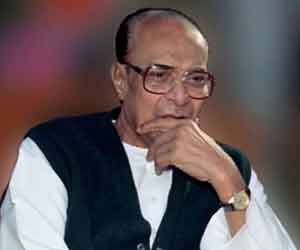
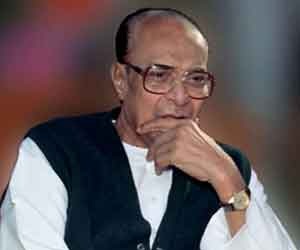
Laxminarayan Patnaik on March 5, 1916 in the ancient city of Cuttack, he had his early schooling in Mission Primary School and Mission (Christ Colle- giate) School. In 1927 he joined Ravenshaw Colle- giate School and passed matriculation in 1932 with a first division and got admitted to interme- diate science class in the Ravenshaw College. Biju discontinued his B.Sc. to undergo training as a pi- lot at the Aeronautic: Training Institute of India and Delhi Flying Club. During college days he actively participated in. sports and captained the University Football and Hockey teams. While still at college, he trav-1 elled all the way from Cuttack to Peshawar on a bicycle which was con- sidered quite an adven- ture in those days, espe- cially for a young chap from the backwaters. Biju was a distinguished pilot and he was the head of the Air Transport Command during the Second World War. He was Lord Wavells per- sonal pilot. He undertook many risky operations across the Himalayas. That was the time when the freedom struggle was. at its peak and the atmo- sphere was perhaps tai- lor-made for Biju to prove his mettle. He un- dertook several secret flying missions carrying Indian leaders to undis closed destinations. For example, sometimes he would fly underground Congress leaders like Jayaprakash Narayan. Ram Manohar Lohia, Aruna Asaf Ali and Manubhai Shah and sometimes he would drop pamphlets supporting the cause of Azad Hind Fauj. He was ar- rested for this and jailed for two years. When Kashmir was invaded, Raja Hari Singh signed the instrument of acces sion with India. The in- vading army was only 20 kilometres away. Jawaharlal Nehru sum- moned the then Chief of Army and Air Force. But all of them expressed their inability to land in Srinagar. Nehru then asked, Is Kashmir lost for us then?" A young man said. No, T will land. He landed and Kash- mir is in India to- day. That was Biju Patnaik, the man of indomitable cour- age. Biju Patnaik also endeared him- self to the freedom loving people of Indonesia, then un- der Dutch rule, by rescu- ing Sjahrir and his com- patriots; he flew with his wife Gyan Devi to Indo- nesian Capital and re- turned with Sultan Sjahrir, the then Prime Minister of Indonesia. with successfully dodg ing the Dutch forces there. Patnaik did this on Nehru's orders and this act earned him a citizen status in that country and the highest national award of Indonesia. Biju's one man mission convinced a grateful Suharto not to sell sub- marines to Pakistan dur- ing the 1965 IndoPak War. Biju organized the Kalinga Bali Jatra tocommemorate the an- cient maritime ties be-- tween Orissa and East Indies. Biju was closelyassociated with the Nepalese democratic movement during 1953. In 1974, when it was. learnt in Delhi that the life of Sk. Mujibur Rehman, President of Bangladesh was in dan- ger, Biju Patnaik rushed with his aircraft and reached Dhaka to rescue Mujibur, but as ill luck would have it, by that time Mujibur had already -been assassinated. Biju fought for the freedom of his nation, fought for the freedom of humanity during the Second World War and for the freedom from colonialism, as in the case of Indonesia, Bangladesh and Nepal. The Chinese aggression on India on October 20, 1962 unfolded another opportunity to Biju. He planned military strate- gies in tandem with Gen- erals and Marshals. Biju Patnaik was given an in- dependent room in the Ministry of Defence so that his advice could be available at the nick of the moment. He was later sent to the United States to prevail upon President Kennedy to come to Indias aid. Under Biju Patnaiks stewardship in 1961, Congress secured a majority in the Assembly for the first time winning 82 seats. Though Patnaik was in saddle for a very short time for two years and four months, he laid the foundation for. Orissa's industrial development. Spe- cial mention could be made of Paradeep Port, MIG Factory at Sunabeda, Ferro Silicon Complex at Theruvali, Hydro Electric Power Project, Balimela. Thermal Power Sta- tion, Talcher, Engi- neering College, Rourkela, Engineer- ing College and Medical College at Burla, Express Highway linking Daitari with Paradeep, Sainik School, Regional College of Edu- cation, Bhubaneswar, Regional Research Labo ratory of the Council of Scientific and Industrial Research, Orissa Univer- sity of Agriculture and Technology and others. Dr. Ayodhya Nath Khosla and Biju were the archi- tects of a ten year plan known as uDecade of Destiny plan. Biju Patnaik broke away from the Congress revolting against Indira Gandhi and formed his own out- fit, the Utkal Congress in 1971. He became the father figure of opposition to the Congress and was one of the founders of the Janata Party in 1977 and the Janata Dal in 1988. From 1971 to 1997, all the elections in the state were fought be tween Biju Patnaik and the Congress. He won 16 elections to Parliament and the assembly, lost seven, including five in one go in 1971. During the second phase of his Chief Ministership i.e... from 5.3.1990 to 15.3.1995, his thought squarely lay on the upliftment of women. tribal development, par- ticipation of NRIs in fur- thering the state economy. He increased the number of districts from 13 to 30. He also fixed the minimum labour charges at Rs.25/- He took a revolutionary step to reserve 33 percent of seats for women in the three tiers of the Panchayati Raj system. A second steel plant in the state remained one of his unfulfilled dreams. Biju was also a Union Cabinet Minister for Steel and Mines in late 70s. During emergency he was one of many leaders arrested and jailed by the then Prime Minister Indira Gandhi Being a champion of sci- ence and technology. Biju founded the Kalinga Foundation for popularization of sci- ence and instituted the Kalinga Prize. The prize is being given away by UNESCO every year for promotion of scientific knowledge. The stories of his adventurous life still inspire the youth of Orissa, the first Oriya to lay the foundation of large industrial units like Orissa Textile Mills and Kalinga Tubes. Modern Orissa cannot be thought of without Biju Patnaik. No leader worth his salt even measured upto his knees. He fought for the dignity and prosperity of Oriyas and became im- mortal as Biju Babu. The Biju Patnaik Interna- tional Airport renamed by Honble Prime Min- ister on 17.04.1998, the Biju Patnaik National Steel Institute (BPNSI) and the Biju Patnaik University of Technol- ogy are some of the modern monuments which recall the spirit of Biju Babu. The Biju Phenomenon continues unabated when a re- gional outfit was consti- tuted under the banner± Biju Janata Dal. This legendary man of Orissa passed away of cardio- respiratory failure in New Delhi on April 17. 1997. It was a dark day for Orissa and India. With his departure, an era has ended in Orissa politics. Politics will never be the same again without him. He was a leader in the true sense of the term and always led from the front. His contributions, especially to the development of Orissa, were enormous. Biju Babu, the man may no longer be with us, but his spirit will be there in the hearts of Odia nation for ages to come
In my dream of the 21st century for the state. I would have young men and women who put the interest of the state before them. They will have pride in themselves, con- fidence in themselves. They will not be at anybodys mercy, except for their own selves. By their brain, intelligence and capacity, they will recapture the history of Kalinga. These are the famous words of legend- ary Biju Patnaik who visualized an industrialized Orissa that would surge ahead with its pool of young men and women. An adroit pilot, a free- dom fighter venerated in India as well as Indone- sia, an industrialist and at natural mass leader, all coalesced into one to make him one of the countrys most maverick figures. Biju Patnaik was a great visionary and statesman. He was a true leader of the masses. His courage, dynamism, magnanimity and dedica- tion to the development of Orissa will continue to inspire the younger gen- eration.
Don't miss out on exclusive news related to Shree Jagannath Culture
Subscribe to our Newsletter
Postal Registration No.- PURI/45/2022-24
CBC Code No.- 320402
Copyright ©2023 . Shree Shrikhetra Soochana Newspaper, All Rights Reserved.
Rajesh Kumar Mohanty
(Editor & Publisher)
Shree Shrikshetra Soochana Newspaper
Raghunath Bhavan, Narendra Kona
Puri, 752001, Odisha, India
Contact
RNI Registration No.- ODIBIL/2021/81452