
Ganapati Cult in Odisha
ARTICLE
Pradeep Kumar Gan
9/26/20253 min read
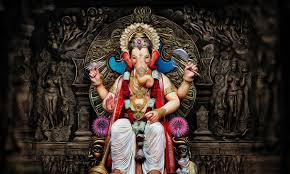
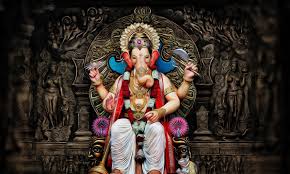
The Ganapati Cult occupies a significant position in the Brahmanical religion of Orissa. The discovery of Ganesh images from different parts of Orissa highlights popularity of this god. Ganesh is the remover of all obstacles and bestower of success. His elephant head suggests cool brain and the steed, and his mount rat suggests perseverance. These two qualities are important to achieve success. He is the only god, who is worshipped first among the realm of gods and goddesses of the Brahmanical pantheon. Ganesh was probably a non-Aryan deity worshipped by the ancient tribes of India. The antiquity of Ganesh cannot be pushed back to the Vedic period. During the Vedic period, the four Vedas do not refer about the worship of Ganesh. Ganesh also does not find a place in the assembly of Vedic deities. Most probably Ganesh was introduced to the Brahmanical pantheon at a later period. As a leader of the Ganas, Ganesh is also called Ganapati. In the later mythology, Ganesh has been referred to in the name, Vinayaka. The mythological accounts with regards to the origin of Ganesh or his birth are extremely confusing. According to Brahma Purana, Parvati created him by meditation and else where in the same work, it is also stated that Ganesh was created out of the dirt of Parvati's body. Association of Ganesh with Siva and Parvati has been referred in the Puranas, where he is called Ambikanandana. The Ganapati Cult is said to have come into existence in around the sixth century A.D. The earliest cult image of Ganapati, so far known, is found in the niche of the Siva temple at Bhumara dated to the sixth century A.D. Almost all the temples of India bear the image of Ganapati and the Odishan temples are no exception to it. He is represented as a Parsvadevata in many Siva temples of Odisha and in some places, there are independent temples built for his worship. During the seventh century A.D. Ganesh for the first time appeared in the Orissan temples. The earliest Ganesh image is found in the Parasuramesvara temple of Bhubaneswar. In the right side Torana of the entrance gate and in the northwest corner of the northern wall of the Parasuramesvara temple, the image of Ganesh has been carved. Here his attributes are Kuthara, Modaka, Japamala and a radish and he is seen without his mount rat. He is depicted alongwith the Saptamatrikas. During the same period the image of Ganesh as Parsvadevata is found in the Svarnajalesvara temple at Bhubaneswar, Paschimesvara temple at Talcher and Dakshinesvara temple at Budagaon in the Ganjam district. The eighth century images of Ganesh are found in the Muktesvara, Sisiresvara, Vaital, Kedaresvara and Lingaraj temples in Bhubaneswar; Siva temple at Delang; Batesvara temple at Balur in the Ganjam district; Ramesvara temple at Baud, Kichakesvari temple at Khiching in the Mayurbhanj district; Jagannath temple at Puri; Maninagesvara temple in the Balasore district and Kali temple in Koraput district. From the ancient times, the Mahavinayaka temple near Chandikhol in the present Jajpur district is a famous Ganesh Pitha, Similarly, the other Ganesh Pithas in our state are located in Khiching at Mayurbhanj district and Karamula in the Dhenkanal district. The images of Ganesh found in Orissa can be divided into two broad groups, because of the presence of the mouse, the characteristic mount of the god. The first variety of Ganesh images are without the mouse and they are seated, rarely standing, holding in the four hands a radish, a Japamala, an upraised Kuthara and a bowl of Sweets. The snakes are shown as the belt and the Upavita. The second variety of image is shown with the mouse, and the god has a standing position, holding in the upper right hand a broken tusk, in the lower right hand a Japamala and in the lower left hand a Kuthara placed upside down. A snake is shown as the Upavita and the head wears a Jatamukuta. The images of Ganesh found in the temples of Orissa fall into three categories, i.e., Asina (seated), Sthanaka (standing) and Nrutya (dancing) from the point of iconography. The Asina Ganesh is found in Orissa from seventh to eighth century A.D. During this period the image of Asina Ganesh image is seen to be seated in Bhadrasana and in some cases in Padmasana like Parvati. The number of Sthanaka Ganesh is rare in Orissa. This type of images were carved in the ninth century A.D. mostly installed by the Somavamsi rulers of Orissa. Among the three categories, the dancing Ganesh images surpass the other two forms in artistic excellence. This form of Ganesh became popular after the eleventh century A.D. Probably this style of Ganesh images were started by the same Somavamsi rulers of Odisha. From the above discussion, it can be said that Ganesh, who appeared on the temple walls of Orissa became very popular from 7th century A.D. till now. The day dedicated to the worship of Ganesh is known as Ganesh Chaturthi which is the fourth day in the light half of the month of Bhadrav.
Pradeep Kumar Gan is an ICHR
Fellow in the P.G.
Department of Ancient Indian History, Culture and Archaeology,
Utkal University, Vani Vihar, Bhubaneswar- 751 004
Don't miss out on exclusive news related to Shree Jagannath Culture
Subscribe to our Newsletter
Postal Registration No.- PURI/45/2022-24
CBC Code No.- 320402
Copyright ©2023 . Shree Shrikhetra Soochana Newspaper, All Rights Reserved.
Rajesh Kumar Mohanty
(Editor & Publisher)
Shree Shrikshetra Soochana Newspaper
Raghunath Bhavan, Narendra Kona
Puri, 752001, Odisha, India
Contact
RNI Registration No.- ODIBIL/2021/81452