Jainism and Buddhisim in Jagannath Culture
ARTICLE
Pabitra Mohan Barik, Lecturer in History in the S.H.Mahavidyalaya, Madanpur, Khurda-752054
6/20/20242 min read
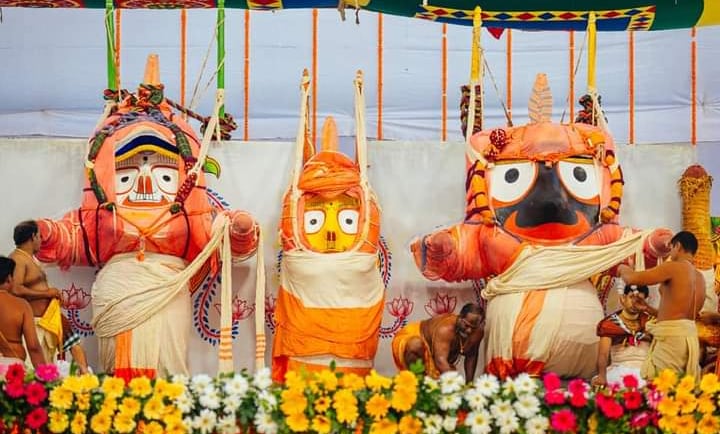
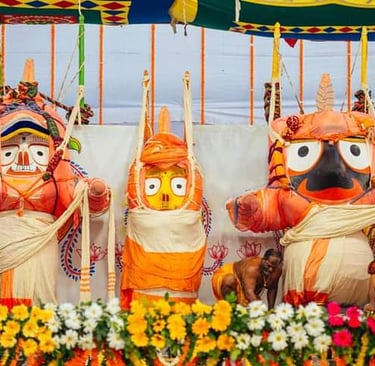
Lord Jagannath of Puri occupies a significance position in the socio cultural and religious history of not only Orissa but also India. The early history of Lord Jagannath is very difficult to know because of non availability of facts and recorded history. It is too difficult to bring out the real picture of Sri Jagannath during ancient period. Puri is one of the foremost religious centres of India. Culture of Sri Jagannath is still shrouded in mystery. Many well known scholars and researchers are also trying to bring out the origin of Sri Jagannath. Eminent scholars have described about the relation of Jagannath culture with Jainism, Buddhism and other cults. In incient times Jainism spread all over Kalinga. Mahapadma Nanda, the king of Magadha conquered Kalinga and took away "Kalinga Jeena" image to Magadha. Pandit Nilakantha Das argued that this Jeena image is actually that of Sri Jagannath. According to him the word Jagannath is derived from Jeenanath. He also wrote that "Jagannath is primarily a Jaina institution". The relation inbetween Jainsim and Sri Jagannath Culture is quite interesting. Jain philosophers and devotees have also compared Tri Ratna of Jainism with Sri Jagannath, Balabhadra and Subhadra. A prominent, historian late Kedar Nath Mahapatra also suppported this view. Some scholars advocate the theory of the Jaina origin of Jagannath. There is great similarity between the images of Nilamadhava and Jaina Tri Ratna. Jainism was very much popular in Orissa, and archaelogical remains and Jaina images recovered from various places of Orissa prove its importance. Hatigumpha inscription of Kharavela highlights the worship of "Adijina" in Kalinga.This worship was done at "Pithunda". According to some scholars Pithunda is identifiable with Puri. Nilakantha Das argued that the Mahaprasad of Jagannath is Kaivalya and this is a derivative of the Kaivalya or the concept of salvation of the Jainas. Mahayan Buddhists propagated that the image of Lord Jagannath was really that of the Buddha. Tri Ratna of Buddhism Buddha, Dharma and Sangha are compared with Jagannath, Balabhadra and Subhadra. Scholars like Prof. Wilson, James Fergusson and Gen. Cunningham have referred to the Buddhist origin of Jagannath. Cunningham argues that the figures of Jagannath, Balabhadra and Subhadra are the three devotional representations of the Buddhist symbol of Triratna "Buddha, Dharma and Sangha". Brahma that is placed at the navel of Jagannath is the nothing but the Buddhist tooth relic that was brought from Kusi nagar to Kalinga. Buddhists believe in worship of physical relics after death. The annual bathing ceremony (Snana Jatra) and the car festival (Ratha Jatra) are Buddhist practices. Cunningham also follows the writing of Yuan Chwang. The Chinese pilgrim speaks of Chelitola on the eastern sea board. According to Cunningham Chelitola was " the present town of Puri." Ratha Jatra of Jagannath resembles the procession of the Buddhist image, as has been written by Fa- Hian. Buddhism does not believe in any class or caste distinction. During Ratha Jatra and other festivities, caste distinction is not found in the Jagannath temple. The term Jagannath was applied to Adi Buddha by Raja Indrabhuti of Sambal in his work " Gyana Siddhi ". Adi Buddha is even now called Jagannath in Nepalese Buddhism. Assimilation of Buddhism into Brahminical Hinduism book place after Buddha was taken in as the 9th Hindu Avatara (Incarnation of Lord Visnu) as shown on the panel of ten incarnations (Dasavatara) inside the Jagannath temple at Puri. After the decline of Buddhism Jagannath might have become New Buddha. Jagannath cult did not belong to any particular sect. It is the point of assimilation of all sects and religions. It can be said that the cult of Jagannath is not just a faith, but a way of life that awakens the innerself to attain celestial happiness.
Don't miss out on exclusive news related to Shree Jagannath Culture
Subscribe to our Newsletter
Postal Registration No.- PURI/45/2022-24
CBC Code No.- 320402
Copyright ©2023 . Shree Shrikhetra Soochana Newspaper, All Rights Reserved.
Rajesh Kumar Mohanty
(Editor & Publisher)
Shree Shrikshetra Soochana Newspaper
Raghunath Bhavan, Narendra Kona
Puri, 752001, Odisha, India
Contact
RNI Registration No.- ODIBIL/2021/81452