Purushottama to Jagannath: A Historical Analysis
ARTICLE
Dr. Janmejay Choudhury
12/1/20233 min read
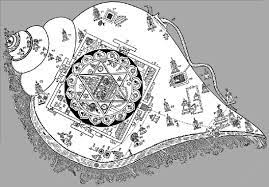
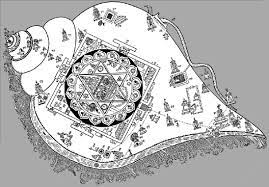
Kramadipika, Goutamiya Tantra give detail description regarding the concept of deity Purushottama as well as the procedure of mantras for worship. Purushottama is unconceivable without his consort Laksmi. Kalidas in his "Raghuvamsa mentions the word Purushottama. This shows that by the time of Kalidas, Purushottama was a well known name of Vishnu, Purushottama was wor- shipped prior to the 3rd century A.D and incorporated in to the fold of Vaisnavism. An early reference to Purushottama is found in the Vamana Purana, Murari Mishra in his Anargharaghava refers to the yatra of the God Purushottama. Krsna Misra in his Prabodha Chandrodaya makes a reference to temple of Purushottama in the Utkal Desa. Madala Panji, the palm-leaf chronicle of Jagannath temple, records that Yayati Kesari, built a temple for Purushottama at Puri. Till the end of the 12th Century A.D in all inscriptions, copper plate grants and in the important literary works the name of the presiding deity of the Kshetra was stated as Sri Purushottama. The Kurmeswar temple inscription of A.D. 1230 is the first record to refer to Jagannath as the presiding deity of the Kshetra. Shri Kurma inscription clearly refers to Sri Jagannath as King and Anangabhima Deva as Raut. Purushottama was declared as Lord of the Ganga kingdom and the Ganga king himself became his Raut (deputy) and ruled the kingdom on behalf of Lord Purushottama. The name was changed from Purushottama to Jagannath to suit different sections of religious beliefs such as Buddists, Jains, Saivas, Vaisnavas and Saktas. Thus Purushottama became Jagannath during the reign of Anangabhima Deva III and from this period the kingship of Jagannath was well known. Epigraphic sources reveals that the inscriptions of Bhanudeva II (1306-1328 A.D) of Ganga dynasty make the first mention of the name, Jagannath. Whether in literature or in the inscriptions of the Gajapati period, both the names of Purushottama and Jagannath are found to denote the presiding deity of Puri. Sri Chaitanya describes Jagannath Purushottama as "jugala Murti" of Radha and Krsna, and followed "Jugal Gayatri Mantra". Moreover Purushottama aspect of Jagannath not only unites the Laksmi, the Krsna and Kama aspects of Sarada Tilaka but also consider him as the king of Odisha. He is the emperor of the kingdom, the king of Odisha is His Raut. The popularity of Purushottama Jagannath increased by the construction of a grand temple by Chodaganga Deva. According to Dr. Satyanarayan Rajguru the name of this ksetra was Purusapura, or Purusa Mandapa and in this Purusapur, Purushottama was worshipped much before 4th century A.D. It may be mentioned here that the Chinese trav eler Hiuen Tsang, who visited Odisha in 638 A.D, does not specially refer to the deity Purushottama Jagannath. But it is possible that Purushottama Jagannath existed during his time. It is thus clear that in the Upanishads, Purusa is a philo- sophical term which is used besides in the usual sense of 'man' or person' in the sense of individual soul, the highest personal God and the Impersonal Absolute. The word Purushottama has been used in the Srimad Bhagavadgita. The Bhagavadgita says that there are two types of Purusa, the perishable one and the imperishable one. But the lord, is beyond both these categories of Purusa. He is known as Purushottama the highest Purusa or Paramatman the high- est Atman. The Purusasukta also speaks of two forms of Purusa, one higher and the other lower. The Universe emerges out of the different parts of body of this lower form of Purusa, where as the higher form of Purusa is the lord of the mortality and the immortality. Thus Purushottama aspect of Jagannath combines Svakiyabhava (as the husband of Laksmi), the aspect of Kama (Beloved of gopis) the God of love as well as emperor of the kingdom. He is the king of kings. His rituals, His food, His Puja are just not ordinary but of very high order which deem fit for an emperor.
Purushottama Kshetra of Puri enjoys its position as oneof the foremost religious centres of India. the seven mokshapuris or salvation centres of the Hindu faith. Named after Purushottama Jagannath, the city is known as Niladri, Sri Ksetra, Sankha Ksetra, Jamnika Ksetra and Martya Baikunth or the heaven on earth. Purushottama Jagannath is supposed to be above sectarian considerations and distinctions of caste and creed. It is a well known fact that the deity in the Jagannath temple of Puri has been referred to in the older records, both literary and epigraphical, as Purushottama. Scholars are of the opinion that Jagannath name has become popular in later period. Those source works which have been quoted or referred to again and again in the Puja manuals of the Jagannath Temple and are held in high esteem in this temple in question pertaining to the rituals, viz the Sarada Tilaka.
Don't miss out on exclusive news related to Shree Jagannath Culture
Subscribe to our Newsletter
Postal Registration No.- PURI/45/2022-24
CBC Code No.- 320402
Copyright ©2023 . Shree Shrikhetra Soochana Newspaper, All Rights Reserved.
Rajesh Kumar Mohanty
(Editor & Publisher)
Shree Shrikshetra Soochana Newspaper
Raghunath Bhavan, Narendra Kona
Puri, 752001, Odisha, India
Contact
RNI Registration No.- ODIBIL/2021/81452