Salabeg - The Great Devotee of Lord Jagannath
ARTICLE
Prof. Jagannath Mohanty
7/19/20253 min read
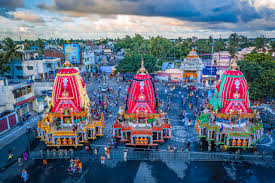
Salabeg was hailing from a Muslim father. He was not allowed to enter into Srimandir at Puri, but was extremely devoted to Sri Krishna and Sri Jagannath. He composed a large number of devotional songs for them. His father was a Mughal Subedar and mother a Brahmin widow. In one of his Bhajans (devotional songs) he has given his identity in an humble way "I am a Yavana" (Muslim). My father is the son of a Mughal Subedar and mother a Brahmin widow. I am born in such a family that the Hindus do not even take water from me. However, nowhere he has mentioned the name of his father or mother. Scholars believe that his father was Lal Beg. He was appointed Subedar, Cuttack which was the main center of administration and one day while Lal Beg was going to Puri on the horseback, he happened to see the enchanting beauty of a Brahmin widow and forcibly married her, who subsequently gave birth to Salabeg at Cuttack and Lalbeg died on the 27th April, 1608. As a very strong Subedar he might have invaded many Hindu temples including Sri Jagannath Temple, Puri. Most probably Salabeg and his mother were neglected, but his education was properly taken care of by his mother. Salabeg like his mother adjusted with Muslim customs, but worshipped Sri Jagannath most fervently. He visited Mathura, Brindavan and other holy places and enjoyed Rasalilas and the prevalent Vaishnavite Bhajans and Kirtans etc. There is a saying which indicates the depth of his devotion to Lord Jagannath. On the way back to Puri, Salabeg fell ill. It was the time of Rath Yatra and Salabeg prayed "O Jagabandhu my master, You please wait for me in your Rath till my return." Actually there was an accident and the Rath had to be detained on the Grand Road (Bada Danda). It shows the love and affection of the Lord for the Bhaktas like Salabeg. Salabeg himself composed many devotional songs in the form of Bhajans and Janans. All those hymns and prayers are dedicated to Sri Krishna and Sri Jagannath. Most of his compositions are so sweet and melodious they have been in vogue in our literature and music over centuries. Some stanzas of his immortal poems may be taken as examples:
"O, Jagannath! I am not asking for anything
Not wealth, nor kith and kin
I seek only a handful of sand from Saradhabali.
I do not want to see any other face except yours."
His deep attachment to Sri Krishna is evident. He always expressed his eagerness to see Him at Mathura and Brindavan. In one poem he has penned:
"As long as I am living, I shall go to Brindavan
And shall take bath in Radhakunda and Shyamakunda
And shall go round the hill Gobardhan.
I shall gladly drink the water of the river Yamuna
So that I shall attain salvation."
Salabeg's deep devotion has also been evident in another hymn as follows:
"This is my humble prayer, O the God of poors
Let my mind be engaged always in your service
I may be deprived of my food and cloth
I will be happy looking at the Neelachakra flag at the peak of the temple O, Lord of the Universe, don't be cruel to me."
Although the prayer songs of Salabeg seem to be similar in theme, but in language, emotions and rhythms those are diverse and multicoloured. The intensity of devotional feelings are so great that those are very much enchanting as well as captivating. Salabeg is a poet of deep devotion, sympathy and human understanding. He is a staunch devotee of Sri Jagannath and Sri Krushna. He does not belong to any particular sect, caste or community. He is a universal preceptor, a great cosmopolitan, a passionate devotee, an extraordinary lyricist and liberal saint. His concern, fellow-feeling and strong sense of dedication to Sri Krishna and Sri Jagannath are incomparable. Lastly, his contribution to the growth of spiritual Oriya literature and secular Oriya traditions and culture is outstanding and memorable.
Don't miss out on exclusive news related to Shree Jagannath Culture
Subscribe to our Newsletter
Postal Registration No.- PURI/45/2022-24
CBC Code No.- 320402
Copyright ©2023 . Shree Shrikhetra Soochana Newspaper, All Rights Reserved.
Rajesh Kumar Mohanty
(Editor & Publisher)
Shree Shrikshetra Soochana Newspaper
Raghunath Bhavan, Narendra Kona
Puri, 752001, Odisha, India
Contact
RNI Registration No.- ODIBIL/2021/81452