Socio-Cultural Significance of the Car Festival
ARTICLE
Dr. Soma Chand
7/19/20255 min read
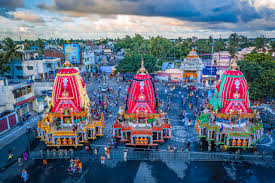
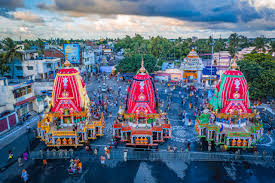
The concept of Car festival and Lord Jagannath is very much synonymous with Orissan society and culture. It constitutes a very important aspect of Hindu religious thought, customs and beliefs. No doubt, it had its origin in the soil of Orissa but at present different parts of the globe have come under its charismatic influence. The car festival needs no description as it has mingled with our emotional as well as sentimental thoughts so to say it has become the blood of our being. Since time immemorial the concept has spread its all-pervasive appeal over innumerable hearts. The reference to car festival is very much present in the ancient Hindu scriptures like Narada Purana, Skanda Purana, Padma Purana, Suta Samhita etc. Even the genesis of the Lord has got much relation with Vedic rituals and ceremonies. Thus, Lord Jagannath and his car festival with deep historical pedigree have permeated the sociocultural altar of the society with customary rites, traditional touch and spiritual heritage. The Lord of the universe has manifested himself in different names. He is Keshab in Mathura, Madhav in Prayag, Madhusudan in Mandar, Padmanav in Anandaranya, Vishnu in Vishnukanchi, Hari in Mayapur. But in the Eastern Coast of India in Puri, He is Jagannath, the overlord. The very name has its implication being the Supreme Master, the Utterance of whom leads to salvation of the soul or Moksha. The Car Festival being the greatest festival of the Lord is but another way to emancipate the human being from material bondage. Rightly it has been mentioned : Dole tu dolagovindam Chape tu Madhusudanam Rathe tu Bamanam drustva Punarjanmam na vidyate. (It means the soul attains eternal salvation if one comes across the sight of Dolagovinda playing holi, Madhusudan enjoying a boatride and Jagannath moving in His Chariot.) The Car Festival besides its deep religious sanctity, spiritual appeal, aesthetic glamour has deep-rooted influence in the sociocultural trend of Orissa. As a matter of fact, the festival symbolises 'confluence of all religions', for the presiding deity of the Car Festival, various religious sects like the Saivas, the Shaktas, the Vaishnavas, the Ganapatyas the tribals, the Buddhists, the Jains and the Muslims alike are none else but the sons and daughters of the same Almighty who has manifested Himself in vary many ways through vary many forms. Jagannath is the unique example where the Lord comes out of the sanctum sanctorium to meet his devotees irrespective of caste, colour or creed distinctions. He gives his benign presence to the assembled by showering His blessings of peace, love and harmony among all. This very magnanimity and universalism of Lord Jagannath are the cardinal significance of the Car Festival for common ordinary human beings. The festival has amply influenced our socio-cultural heritage. As we know the specific date of the festival is the second day of the bright fortnight of the month of Ashada (around June 15th to July 15th). Indeed, it is regarded as a very auspicious day with specific Puja and fasting. The entire day is marked by devotional flavour of worshipping the Lord, singing and listening to Jagannath Janana, Bhajana and doing Samkirtan etc. Even those who fail to attend the festival observe it in their respective places of worship even in their own spheres to the maximum limit. The festival is a universal one. Here the untouchables, the social outcastes, the downtroddens mingle together with the so-called upper castes at Badadanda. The system of Chhera-Panhara done by the Gajapati kings of Orissa reminds us of Rajadharma for the service of god and man. Thus, the concept that king as the first among the equals gets strengthened. One of the most unique features of the festival lies in the presence of brothers and sisters in the car. The love and affection of the elders for the younger sister is typically presented in the festival setting aside the claim of wife and other family members. Rightly it has been mentioned, "of all Hindu shrines, the temple of Jagannath (Lord of the Universe) in Orissa is undoubtedly the most famous. From very early times, we have detailed descriptions of the temple, the vast concourse of people who attend the annual festival and the ponderous cars of Jagannath and His brother and sister drawn by the pilgrims to his country house." The peculiarities of the three cars in other ways represent the other aspects of human life especially Sattva, Tama and Raja. The car of Balabhadra popularly known as Taladhvaja consists of fourteen wheels is decorated with blue and red clothes, ploughs, bunch of corn and Purna Kumbha (full pitcher). The car represents creativity and agriculture that are the root cause of human prosperity. It symbolises the royal qualities of human life or Rajabhava. The twelve wheeled Darpadalana chariot of sister Subhadra is marked by talabhava or balanced qualities of human life. Hence darkish presentation. The twelve months are imaginatively fixed with twelve wheels which help in carrying the programme of creativity inaugurated by elder brother Balabhadra. The sixteen wheeled Nandighosh chariot of Lord Jagannath is represented by Sattvabhava or serene and holistic qualities covered with yellow clothes. The Lord is the master of Sohala kala or all sixteen qualities needed for human life - hence sixteen wheels. Again the word Nandighosh consisting of two syllables (Nandi + ghosh) meaning happy journey in other words the car festival stands for journey of happiness, journey of devotion, journey of trances amidst the allpervading fervour of the Lord. In addition, the car festival of the Lord has manifested itself in the realm of architecture. The concept of a chariot drawn by the horses driven by the charioteers has been duely represented at Konark. Here the entire structure is conceived in the form of a chariot for the worship of Sun god. In Hampi Vijaynagar we find a similar Rath or chariot type structure with happy reminiscences of Jagannath's car. Thus, the popularity of the car festival especially among the artisan class of the society has been indirectly strengthened. The car festival has its reflections in other ways also. The observance of Rukuna Rath for Lord Lingaraja in Bhubaneswar on the eighth day of the bright fortnight of Chaitra, Vairabha Yatra in the temples of Nepal, Matsyendra Yatra of the Buddhists in the month of Chaitra are the brilliant examples to be cited in the said context. Even the ancient Chinese traveller Fa-hi-en has referred to the car festival of the Buddhists in Khotan and Central Asian territories. In Srilanka, the teeth of Lord Buddha is put in a casket. It is placed in a chariot which is pulled by the devotees. It is annual phenomena of the Buddhists. All these performances come under the cultural significance of Jagannath's heritage. The car festival has its tremendous impact in enriching Oriya literature. Lord Jagannath and Purushottam Kshetra being the pivot of Orissan society and culture, prayers, hymns, devotional songs, scriptures, mythologies, typical Orissan dances have evolved centering round the Lord and His abode through the ages. The poets, writers, singers and dancers have made their immortal contributions aiming at the significance of car festival. Mention may be made of Dinakrushna, Sadananda, Kavisurya Baladev Rath, Gourcharan, Banka Das, Jadumani, Hadidas, Abhimanyu Samanta Singhar, Jayadev, Salbeg et.al. who through their emotional creations have strengthened the lyrical tradition of Oriya liteature. The socio-cultural significance of the car festival is vast and extensive which is difficult to be adjusted in this small article. The festival is an institution by itself. Its genesis, growth, spread, implication and magnificence are but the reflections of spiritual, metaplysical universal catholicism of our socio-cultural heritage. The various names of the festivals like Ghosha Yatra, Srigundicha Yatra, Patitapabana Yatra, Adapa Yatra, Dasavatara yatra are the other ways of index of its multifarious significance. Thus, the car festival needs no description. Its impact on Oriya society and culture is simply obvious. It is felt and realised in all courses of our actions in various walks of life.
Don't miss out on exclusive news related to Shree Jagannath Culture
Subscribe to our Newsletter
Postal Registration No.- PURI/45/2022-24
CBC Code No.- 320402
Copyright ©2023 . Shree Shrikhetra Soochana Newspaper, All Rights Reserved.
Rajesh Kumar Mohanty
(Editor & Publisher)
Shree Shrikshetra Soochana Newspaper
Raghunath Bhavan, Narendra Kona
Puri, 752001, Odisha, India
Contact
RNI Registration No.- ODIBIL/2021/81452