The Legacy of Subarnapur: Maharaja Birmitrodaya Sing Deo and the Cultural Tapestry of Jagannath Worship
ARTICLE
Dr. Pabitra Mohan Nayak
7/30/20242 min read
Maharaja Birmitrodaya Sing Deo's novel Nilakuntala (1927) invokes the deep historical connections between the state of Sonepur and the legendary King Indradyumna of Avanti. This association is further supported by Niladri Mahodayah (1922), dedicated to Niladri Sing Deo, the Raja of Sonepur (1841-91). According to accounts, Indradyumna crossed the Mahanadi and spent a night in Subarnapur, captivated by its beauty, thus solidifying the region's significance in Jagannath lore.
Birmitrodaya also claims that Prithviraj Chauhan, on his way to Puri, paused at Subarnapur, enchanted by its charm. While historical accuracy regarding Chauhan’s journey is debated, the route from Delhi to Puri does indeed pass through Suvarnapur, reinforcing its importance as a pilgrimage site. I propose in my book Gachhnatale O Gumphabhitare that the original seat of Lord Jagannath may have been the Sonepur region, suggesting that Yayati II of Subarnapur enshrined the deity in the Puri temple. Recent archaeological discoveries, including ancient images of Jagannath, Balabhadra, and Subhadra from the 8th century at Tentelkhunti, lend credibility to this hypothesis and support the assertion of historian Padmasri Satyanarayan Rajaguru that the original deities were carved from stone.
In my exploration of Sonepur's Jagannath temples, I compiled a list of numerous shrines dedicated to the cult, emphasizing the area’s rich religious landscape. Notably, the main Jagannath temple in Subarnapur was established by Raj Sing Deo (circa 1700-1725) and has since been a focal point for local devotion and royal patronage. Successive rulers, including Prithvi Sing and Niladri Sing, further enriched this spiritual heritage by constructing additional temples dedicated to various deities.
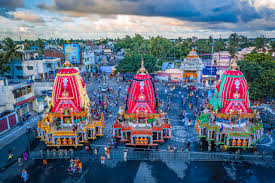
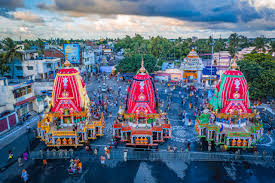
The annual Ratha Yatra in Subarnapur is a vibrant manifestation of local culture and community involvement, drawing parallels to the grand festival in Puri. This festival involves a well-organized division of labor among various community members, ensuring the smooth execution of the celebrations. Carpenters, blacksmiths, painters, and tailors each play distinct roles in preparing for the event, making it a true "ganaparva" or people's festival.
The ceremonial activities commence with Snana Purnima, when the deities are ceremoniously bathed, followed by a period of rest known as Anabasara, during which public viewing of the deities is prohibited. This reflects a traditional belief in the rejuvenation of the deities. The Ratha Yatra itself occurs on Asarh Sukla Dwitiya, featuring two main chariots for Jagannath, Balabhadra, and Subhadra, along with smaller chariots for Kotha Jagannath.
The pahandi, or procession of the deities to the chariots, is accompanied by traditional music, recitations, and the boisterous sounds of drums and conchshells. This lively atmosphere builds anticipation as the royal family, including the Maharaja, participates in various rituals, culminating in the chariot procession. Unlike in Puri, where the chariot route is direct, Subarnapur's route is semi-circular, leading to unique local traditions.
One of the festival’s distinctive features is the Dwadasvatara, where the deities assume twelve incarnations throughout the yatra, representing various avatars of Lord Vishnu. This rich tapestry of culture, devotion, and community spirit encapsulates the essence of Jagannath worship in Subarnapur, making it a significant pilgrimage destination in its own right.
Thus, the interplay of history, mythology, and communal celebration continues to shape the identity of Subarnapur, illustrating how the legacy of Maharaja Birmitrodaya Sing Deo and the traditions surrounding Lord Jagannath have intertwined to create a vibrant cultural heritage that endures to this day.
Don't miss out on exclusive news related to Shree Jagannath Culture
Subscribe to our Newsletter
Postal Registration No.- PURI/45/2022-24
CBC Code No.- 320402
Copyright ©2023 . Shree Shrikhetra Soochana Newspaper, All Rights Reserved.
Rajesh Kumar Mohanty
(Editor & Publisher)
Shree Shrikshetra Soochana Newspaper
Raghunath Bhavan, Narendra Kona
Puri, 752001, Odisha, India
Contact
RNI Registration No.- ODIBIL/2021/81452