The Mirror of Shri Jagannath
ARTICLE
Madanmohan Tripathy
4/14/20232 min read
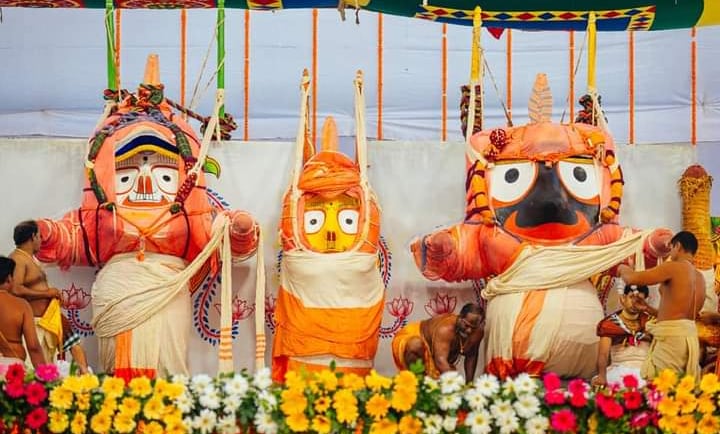
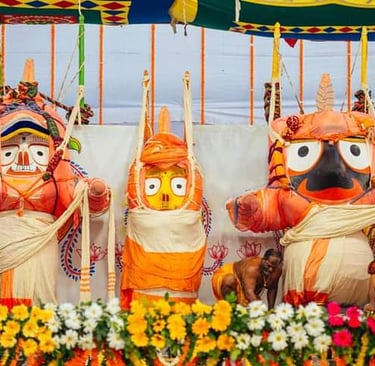
The articles required for the daily rituals in the Sri Jagannath temple at Puri, include three mirrors. The mirrors are made of brass having no part of glass. each about two and half feet high. It is discshaped with a stand. Both the urfaces of the disc are well polished. The mirrors are used at the time of Abakash of the Deities. Abakash means cleaning of the teeth and bath of the Deities. This religious rite is performed subsequent to the dwaraphita (opening of the temple-doors in the early morning), Mangala Alati (waving of lamps before the Deities) and Mailam(removal of flowers, clothes etc. decked on the Deities in the previous night). The time for the abakash is within 6.30 in the morning, as specified in the Record-of-Rights of the temple. The Sevaks (Servitors) associated with this service are Pushpalak (3 persons). Paniapat, Suarbadu, Khatulisevak Mukhapakhala-Padhiary. Mukhapakhala Puspalak, Garabadu, Amla-Ghatuary. Mahabhoi, Jyotisha-Khurinayak, Bhandar-Mekap and Darpania. The Pushpalak Sevaks perform the abakash ritual sitting on the floor down the Ratnavedi (Pedestal) in the sanctum sanctorum of the temple. They sprinkle water mixed with camphor, curd, sandal paste and amla fruit-paste on the three brass mirrors placed on the floor, one each for the three Deities-Lord Balabhadra, Lord Jagannath and Devi Subhadra, symbolizing Their bath. Before bath, the Sevaks also show tooth-sticks and tongue-scrappers to the Deities symbolizing cleaning of Their teeth and tongues. One such mirror is also used in the 'Pushyaviseka' ritual of Lord Jagannath, celebrated on the full moon day in the month of Pausha. There is a ritual service known as Darpania Seva in the temple. The word 'darpan' means in English 'mirror'. The Sevak of this service, Darpania Sevak is in charge of keeping the mirrors for the rituals. He also cleans certain utensils used in the rituals on a place called Anasarapindi after Mangala Alati is over. The necessity of a mirror as on article of Hindu rituals has been mentioned in the Srimad Bhagavata (Book- Eleven). It would not be out of place to mention here that in the Tibetan Buddhism a mirror (in their parlance "Adarsha') is used in their rituals. In Oriya, the words adarsha, darpana, aaina, aarisi, mukura convey the same meaning i.e. mirror. The mirror (adarsha) of the Tibetan Buddhism has resemblance with that of the Puri temple.
Don't miss out on exclusive news related to Shree Jagannath Culture
Subscribe to our Newsletter
Postal Registration No.- PURI/45/2022-24
CBC Code No.- 320402
Copyright ©2023 . Shree Shrikhetra Soochana Newspaper, All Rights Reserved.
Rajesh Kumar Mohanty
(Editor & Publisher)
Shree Shrikshetra Soochana Newspaper
Raghunath Bhavan, Narendra Kona
Puri, 752001, Odisha, India
Contact
RNI Registration No.- ODIBIL/2021/81452