Twelve Festivals of Lord Jagannath
ARTICLE
Balabhadra Ghadei
6/10/20235 min read
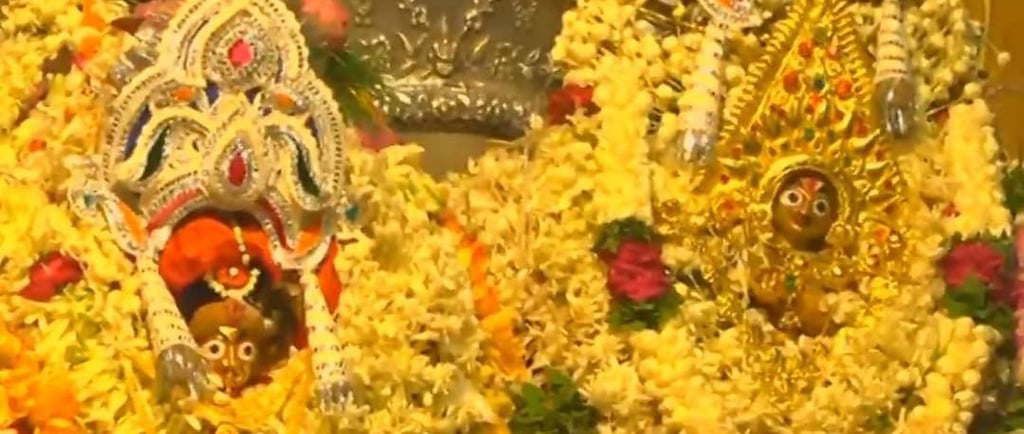
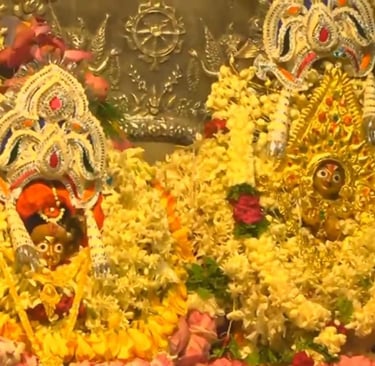
The grand temple of Lord Jagannath is famous for if unique ritualistic practices as well as various functions observed throughout the year. Traditionally, twelve months are fixed for Dwadasa Yatras or twelve festivals but in reality more than fifty six festivals are observed. throughout the year.
1. Snana Yatra: The annual cycle of the festival begins with Snana Yatra or Bathing Festival which falls on the full-moon day of Jyestha (MayJune). The three deities along with Sudarsana and Madanmohan are brought out from the Garbhagruha (Sanctum Sanctorum) of the temple and taken in a and placed on the Snanabedi situated in the north-cast corner of the Bahara Bedha(outer) enclosure). The deities are bathed there with 108 pitchers of water from at well called Suna Kua (Golden well) near the Uttara Dwara (North gate), which is used once on this occasion. After the bathing ceremony the deities are dressed like Ganesha (the Elephant: the God).
At night, the deities return to the temple in a traditional ritual procession called Pahandi procession and again they are placed (except Madanamohan) in a place called Anasara Pindi.They remain there unexposed to the public view for a period of fifteen days. During this period, the servitors of a particular group known as "Daitapati perform certain secret rituals of the deities. These rituals are called Anasarariti On Pratipadatithi i.e. the day before the Car Festival, the deities give Darshan" to housands of eager devotees which is known as "Navajauvana Darshan'. A special rite called Netrotsav (Festival for eyes) or Navayauvana (Festival of the new youth) takes place on this occasion. On this day onwards, the Car Festival actually starts till the deities return back to the Main Temple.
2. Ratha Yatra:- The world famous Ratha Yatra or Gundicha Yatra of Lord Jagannath is celebrated annually on the second day of the bright fortnight of Asadha (June-July). This Yatra being one of the much awaited Hindu- festivals, attract pilgrims from all over the world. On the Car Festival day the deities are taken out of the temple and placed in their respective chariots, kept near the Simhadwara.In the three chariots namely Taladhwaja forLord Balabhadra. Devadalana for Goddes Subhadra and Nandighosa for Lord Jagannath, all deities are carried to GundichaGhara located at a distance of about 3 kms from the temple. On the ninth day, i.c. return Car Festival day, the deities ure brought to the Simhadwara area of the Jagannath Temple
3.Sayana Ekadashi-This festival takes place on the 11th day of bright Ashadha, when the deities are still in chariots in the Lion Gate after the Return Car Festival. On this occasion, the images of Vasudeva, Bhubaneswari and Narayan are taken to the chariots. After some rites are performed there. these images are taken to the Chamber of Slumber for enjoying complete rest for four months. It is believed that Vishnu falls asleep in Ksheerasagara- cosmic ocean of milk on Seshanaga, the cosmic serpent. Thus, the day is also called Deva Shayani Ekadashi or Hari-Shayani Ekadashi. Vishnu finally awakens from his slumber four months later on Prabodhini Ekadashi, the eleventh day of bright fortnight in the Hindu month Kartika (October- November).
4. Dakshinayana Yatra This festival takes place on the day of Karkata Sankranti Special rites are performed on this day as the Sun begins to move to the autumnal equinox towards northern 58 hemisphere i.e. from the autumunal equinox
5. Uttarayana Yatra:- In of the temple of Lord th Jagannath, Makara an Sankranti is observed as Uttarayana Yatra, th Astronomically, on this day the Sun starts moving Zodiac sign of 9. Makara(Capricorn) to the Karkata(Cancer). A in special recipe of raw rice soaked in water the da previous night and mixed da with coconut gratings. clarified butter, spices and jaggery etc. (known as Makara Chula) is prepared co and offered as Bhoga to Lord Jagannath. This is taken around Badadeula in al a procession which is called 'Makar Bedha.
6. Parswaparivartana Ekadashi : This festival takes place on th the 11th day of the bright fortnight in the month of Bhadraba. The deities enjoying sleep change sides on this day.
7. Hari Utthapana Ekadasi:- This festival is da observed on Kartika Sukla Ekadasi Tithi, ie. 11th day of the bright fortnight of Kartika (October- November). On this day, the deities rise from their slumber after enjoying a pr sleep for the four rainy months (Chaturmasya).
8. Prabarana Sasthi / sp Odhana Sasthi: It is pa observed on the Sukla 11 Pakhya Sasthi in the lunar (1 month of Margasira 1 (November December). From this day Ghodalagi of the deities begins and the bodies of the deities are covered with colour woollen cloth specific for these days till Magha Sukla Panchami or Basanta Panchami the 5th day of bright Magha (January-February).
9. Pushyabhiseka- On the Sukla Pakhya Purnami in the lunar month of Pausa, special attire of the deities is performed. The deities are dressed in Suna Besha (God attire) on the Ratnasimhasana. Since Lord Ramachandra's coronation ceremony was celebrated at Ayodhya on this day, this festival is also known Ramabhiseka.
10. Dola Yatra:- The famous Dola Festival of the deities is celebrated from Phalguna Sukla Dasami Tithi ie. the 10th day of the bright fortnight of Phalguna (February-March) upto Phalguna Purnami, ie, the full-moon day. On Phalguna Purnami, the image of Lord Dolagobinda representing Jagannath Mahaprabhu along with Devi Lakshmi and Devi Saraswati are taken in a procession to a dias called DolaVedi located outside the main temple and special nitis are performed.
11. Damanaka Chori (Dayana Lagi)- On the 13th and 14th day of the bright fortnight in the month of Chaitra (April), the Damanaka Chori Festival is observed. Оп this occasion the deities. Rama and Krushna march in a procession to the flower garden, called Jagannath Vallabha Matha from where they steal the tender leaves of the Dayana. Next day these leaves are offered to deities in great solemnity.
12. Chandan Yatra:- The Chandan Yatra or the Sandal Festival lasting over 42 days, is an important festival next to the Car Festival and Snana Yatra. It is observed both inside and outside the temple. The part of the festival outside the temple is called Bhahara Chandana or outer Chandana which lasts for 21 days and the festival inside the temple, the Bhitara Chandana or Inner Chandana is I observed for another 21 days. Bahara Chandana starts from Akshaya Tritiya and construction of the Chariot for the annual Ratha Yatra Festival starts from this day. During the first 21 days, the representative idols of the main deities of the Jagannath Temple as well as images of Lord Shiva from five Shiva temples known as Pancha Pandava are taken in a procession from the Simhadwara or the Lion's Gate of the temple to the Narendra Tirtha Tank on their respective Bimanus (Chariots carried on human shoulders). In the Narendra tank, the images play in two, beautifully decorated and illuminated Chapas (boat houses) and worshipped. They are generally taken around the tank in these Chapas. Then they are carried to a house known as Chandana Ghara inside the tank, where they are bathed for some time in scented water. Thereafter, they are dressed and decorated and Bhoga or food offerings are made. Finally, second round of cruise takes place with the said Chapas and then the images return to the main temple. The last day of the first phase of the Chandana Yatra is called Bhaunri. Thousands of people enjoy this festival with great delight. The second phase of 21 days known as Bhitara Chandana is celebrated inside the main temple. On this occasion the images are placed in brass pots containing water scented with sandalwood which are kept on a special platform called Jalakrida Mandapa i.c. water play platform. This is the platform on which the wedding of Krishna with Rukmini takes place during this period.
Don't miss out on exclusive news related to Shree Jagannath Culture
Subscribe to our Newsletter
Postal Registration No.- PURI/45/2022-24
CBC Code No.- 320402
Copyright ©2023 . Shree Shrikhetra Soochana Newspaper, All Rights Reserved.
Rajesh Kumar Mohanty
(Editor & Publisher)
Shree Shrikshetra Soochana Newspaper
Raghunath Bhavan, Narendra Kona
Puri, 752001, Odisha, India
Contact
RNI Registration No.- ODIBIL/2021/81452